Wednesday, July 25, 2012

New Home For The Kiwi

AkiwiRetrospective has now moved.
Find us here at:

Thursday, July 12, 2012

Extra Macro Lenses for the HS series.

Filter Sized Macro Closeup Lens


One of the things that my HS10 had was instant zoom, which could be used at two different settings/levels. Very handy for doing macro work or even long shots.
In the HS20 this was dropped, something that really annoyed me when I discovered that.
In the HS30 its been brought back, but renamed as intelligent zoom and appears to work in a very similar manner to the HS10's instant zoom.


As most Fuji users know, these cameras are capable of some really nice macros. You can of course get the Raynox DCR-250 with a adapter ring for the Fuji 58mm lens thread from amazon at around $100.00USD if freighted.


There is however another route that the HS20 owner can take and that is to use a closeup lens filter such as these found on E-bay UK.These are the ones I bought. My daughter has just arrived back from the UK and was able to bring them with her. They cost 8.99 British pounds or roughly $16.00 NZD. There are many varieties and suppliers. A quick search on E-bay or Amazon using "Closeup Filter" in the search bar will get you to where you need to be.


I have had a very brief play with these and will do a more in-depth review in the coming days. The Borwin versions seen here are considerably more expensive and I have to wonder if they aren't one and the same and you are paying simply for the name on the product.
The closeup lenses I have show good fit and finish and come in a pouch, with individual pockets that use Velcro tabs to secure them. Included in the box was a small packet of Q-tips as well as a Pufferbrush for lens cleaning as well a good quality lens cleaning cloth. All in all pretty good value for less than $20.00 NZD.


Wednesday, July 4, 2012

Apology To Our Readers

Maniac Spam Filter!!!

For some unknown reason a number of your comments have been dumped into the spam filter folder.
I have no idea why this is or what the cause may have been, but over the last 4 weeks the odd comments has been dumped.
Today the spam filter "coughed up" these comments that it had previously hidden.
I make it a policy to try and reply to all comments here on the blog.


All comments have now been reinstated so please don't think we/I am ignoring you.
We do get a small amount of spam and these are normally sorted by the filter, occasionally genuine comments also get swallowed up.


Cheers
Ralph

Monday, July 2, 2012

Examining The Competition.

With the problems currently plaguing the Fuji X series and the general mediocre improvements with the HS30 where does that leave current or future Fuji purchasers. Is there anything out there that gives as much as you get as Fuji's HS series does for instance?
Well yes and no. It all depends on what you want or can forego if contemplating an alternative to let us say the HS30. The HS30 is by no means a bad camera, it just doesn't have a great deal to offer in the way of improvements over its predecessor the HS20. The new improvements are nice but if you are looking for a bargain then the HS20 is a definite buy.


FZ-150
OK, so where does this get us then?
The main competitors are:

P510
All of these cameras have long telephoto reach, from the Panasonic's 24X to the Nikon's 42X zoom.
All offer images stabilization and all have an electric zoom, most now sport a second zoom toggle on the lens barrel to control zooming while keeping the camera stable.
All these cameras use a 1/2.3 type sensor in various forms and all are smaller than the sensor in the HS20/30. While the difference isn't large in terms of area it most likely is when considering pixel density.
The SX40 and the FZ-150 as well as the Leica sport 12.1 MP sensors. The P510 comes in at 16.1 the same as the Fuji's, with the SP-810UZ at 14 MP and the DSC-HX200V coming in at an amazing 18.2 Mp on a 1/2.3 sensor. Based on pixel density you would expect the likes of the Canon  and Panasonic cameras to be the least affected by sensor noise and the Sony would need to employ some fairly sophisticated noise reduction to give good imagery without affecting Image Quality.
SX40 HS

We already know that at 16.1 MP on a 1/2 inch sensor as in the Fuji HS20, it does indeed need to employ some fairly serious noise reduction software, and does so with some very good results. This shows that it can be done but at nearly 20MP density on such a small sensor one has to wonder where the upper limit lies for such a small piece of silicon.
Most sport a movable LCD as well as viewfinders of variable usefulness.

Sensors aside, all these cameras boast a plethora of shooting scenes, shooting modes, and video support. Some do these things well, but not necessarily perfect while others excel in some areas but lack in others.
SP810UZ
By and large image quality runs from very good to excellent depending upon the camera and the mode of shooting. All will give very good results if the time is taken to learn how to properly get the best from each of these cameras. If you arent printing above A4 sizes you wont be disappointed. Printing above these sizes will take some forethought and planning to achieve a really top result. By no means impossible, just a bit harder to do.

V-Lux 30
We now return to the original question, is there a really good alternative to the HS series from Fuji. Thats hard to qualify if you judge the cameras on image quality alone as some of them employ very different method for getting a nice crisp image.
Its probably better to check what you are giving up in terms of ergonomics and equipment. This depends of course on manufacturer differences. here are some of the things you will lose if considering other manufactures, not all of the items are lost on every camera. There are however things that the Fuji's have that none of its competitors have. These are highlighted by the red asterisk.
HX200V
  • Weight - the HS series has a nice small DSLR like form factor and weight with good balance and a very good grip.
  • Articulated LCD screen (Olympus)
  • Reduced LCD resolution.
  • Full manual control including full manual focusing ring (Ala DSLR)*
  • Fully manual Zoom Lens*
  • EXR shooting & Jpeg technology*
  • AA Batteries, something I find indespensible when traveling, especially lithium AA's at 1000 shots or better*(HS20 only). The Nikon's estimated amount of shots on the standard battery is appalling when matched against the others.
  • Std 58mm screw threaded lens, good for ND filters and polarizes.
  • Large number of external controls (buttons) this is unique to the HS series and the XS-1.*
I'm sure I've missed something off this list, so feel free to add yours as well. For me foregoing any of those items really isn't an option as I regularly employ all these and many other features in my HS20. Thats what makes the Fuji's such a nice camera to operate, and for those who use a DSLR as well they will quickly appreciate the amount of external controls the the Fuji applies. Theres nothing worse than having to delve through a large number of internal menus to get what you want.
The Fuji's are not without their flaws and I have said as much when necessary. It now remains to be seen as to what Fuji's direction will be for the coming year(s). I think the development of their Bridge-cam is a very smart direction to take. They are getting very close to what the more experienced camera user is wanting from these types of camera. It wont be long before the Bridge camera will rival the entry level DSLR if the manufacturers continue to develop this format, which is one that I think should be persued.
Not everyone is able to afford a DSLR but most folks are willing to stretch a bit if they can have a similar quality product that does just as well.
There is one caveat to this list and it concerns Panasonic's FZ-150 & the Leica V-Lux. They are one in the same camera, the only difference is cosmetic as the Leica version has all the Leica badging, and cost 30% more the the Panasonic/Lumix FZ-150. Heres an interesting comparison/report well worth reading.

Monday, June 25, 2012

Can Your Fuji Do This?

Don't try this with your Fuji Bridge cameras, they wont thank you for it.
The Pentax K30 is now my first choice as a replacement for my HS series Fuji Camera. As its still very new to the market I will most likely wait until next year to get one. I will either buy just the body or a kit setup depending where the prices fall to.
As I already have a stable of good quality Pentax lenses on the shelf here at home, and with the Pentax wisely employing Sensor Shift Image Stabilization it means every Pentax lens ever made can be used with this and any other Pentax DSLR that sports a K series mount.


Why am I considering the Pentax over the new Fuji's?
Simple really, the last good quality camera made by Fuji in the SLR format was the HS20EXR. The HS30 seems to have a few shortcomings, nothing major , but to date it appears image quality is a little better in the HS20 than the HS30. The XS-1 and X10 while innovative have been a disaster in application, which is sad as they had the potential to be giant killers. The X100 while a nice idea was also plagued with a good many issues, some of which weren't curable with a firmware fix. If you like slow focusing retro styled rangefinder type cameras, then perhaps the X100 is for you.
This leads to the X-Pro 1, which by all accounts seems to be a really successful camera for Fuji. So why make it so expensive that virtually no one is even going to consider buying it? The Body for the X-Pro 1 plus a standard F1:4 35mm lens will set you back $3500.00NZD and while this is still considerably less than the Leica M9, You could buy two K30's or a one K30 and a bunch of extras, like Tripod flash, macro lens or an all in one 18 - 250mm zoom lens.
My point is Fuji should have been more concerned about the quality of product going to market if they wish to be long term contenders in what is a very tough marketplace at present.


The standard K30 kit with a 18-55mm lens will set you back $1600NZD. Compared to the current average XS-1 of $1200NZD. It may sound like a lot but the K30 will outperform the XS1 in every way.
If you want something a little less expensive then the Nikon D3200 is going to be a contender.At less than the average price of the Fuji XS-1, with the 18-55mm kit lens the D3200 is going to be well worth a look. While it isn't a sophisticated as the K30 it packs a lot of punch and used well again is going to outperform the XS-1 in every area.
Had the XS-1 not suffered from lens droop, less than stellar AF , softness at long focal length and the specular highlights issue, as described in D-Photo Magazines review as well as others, then Fuji just may have had a competitor that was able to foot it with the entry level DSLR's.
As it stands there is no clear indication from Fuji as to whether it will continue with the XS series camera. I hope they do and that this time they put real effort into getting it right rather than pleasing the marketing and sales departments. With the above items sorted the XS-1, next generation could well be a really good camera. The elements are there they just need to get them right.

Tuesday, June 19, 2012

AE Lock & Difficult Shooting.

There's often times when you encounter a situation where no matter what you do you just don't seem to be able to get a well balanced shot. Either the sky overexposes or the foreground gets too dark and it doesn't seem to matter which setting you use nothing really works.
Sound familiar?
Thats where AE Lock comes into its own. The AE Lock button is the one directly below the red video button on the back of the HS20.
You find the settings in the setup menu and there are two that you need to set. The first is how you want the button to work. It can be set to toggle which means as soon as you release the button it reverts to the settings the camera chooses or you can select it to be used in an On/Off function. Just remember to switch it off when you have finished the current shot(s)
I prefer the On/Off method as it means I can recompose my image and refocus without the settings for exposure changing.


The following images show the scene in question. The camera was set in EXR Dr Mode, Auto ISO800 and Auto DR 800. The time was 8:35am, approx 35 minutes after sunrise. Conditions were frosty and the light comes from left to right. As can be seen the light at this time of the day is very low and angular and quite intense, creating heavy shadows and contrast.
The first image was taken using spot metering with -0.33 EV and centered on the middle shed roof.


The same was repeated in the second shot but average metering was selected. Why the change in metering?
While the first exposure looks good, it isn't right. The sky has suffered some burnout and the distant mountain has lost contrast and detail. The foreground shadows were a lot darker than the image suggests, in fact so dark that the black and white cows further into the shaded areas were all but invisible.


The switch to average metering didn't help either but made things a lot darker.The blue in the sky is now correct as is the color/contrast/detail of the small mountain in the background, although this too is a little darker than in reality. So we need to marry these to images together to get something a lot closer to how the scene actually looked. At this point you could try Matrix (multi) metering but all you would get is a combination of both these images without alleviating the problems.
With a little experimenting I settled on a area just by the yellow bus sign as the point for getting a good exposure, you can see the scene change in the LCD as you search for an area to use as the source of metering. Once you have a good balanced look in the LCD, adjusting the Ev as necessary, simply press the AE-l button and you will see the EL indicator come up at the bottom of the LCD showing the set exposure. Its then just a matter of recomposing and refocusing on the image and take the shot.
Note: Once AE-L is pressed you cant use any exposure control and this includes the Ev setting.

After resetting Exposure
& Setting AE-L
In the third image even after setting the AE-L there is still a little less light in the foreground. 


Final Edited Version
To offset this I adjusted the foreground fill light in Post Processing to balance out the shadows closer to me. The finished image is now very much how the scene looked at the time I took this shot. 
The only problem I encountered doing this was my fingers going numb from the cold. It was -3C at the time and I had taken my gloves off to better select the buttons on the camera. Gloves aren't your friend on this sort of occasion.

X10 & XS1 .. Progress Update

A number of folks at Dpreview are now reporting that they have had the sensor changed in there X10's. For the most part this seems to be a positive move with the blooming issue being resolved. I have had the chance to observe a number of shots from these folk and by and large things appear to have been solved. I'm not entirely convinced that the new sensor is  as crisp as the old one, but for now am willing to put this done to the differences in image display depending upon provider.


The XS1 apparently isn't considered for a overall sensor replacement, but it seems if you can prove the case (ie: send some images with the camera) they will consider the sensor exchange. It would be wise to check with your local Fuji dealer or the sales staff at Fuji headquarters for each country to check if this service is being offered for your locality. It also at this point appears that the lens droop issue isn't even being acknowledged by Fuji, even though many owners have reported this phenomenon to varying degrees.


Kim Letkemen is currently reviewing the XS1, and has reported that the lens droop appears to compromise the acuity of the lens.
You can see his full report here. Kim is a RAW shooter by preference , so if its RAW you prefer this article will definitively be of interest.

Sunday, June 10, 2012

New Cameras

While the problems surrounding the XS1 and the X10 continue and sadly they do, the competition is moving ahead.
Click this link for full story
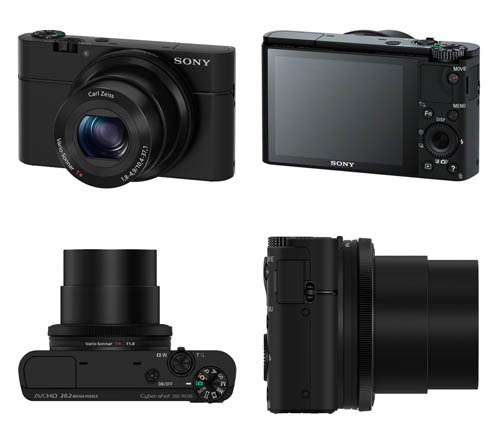
Sony's new compact cameras as seen here could well spell the beginning of a new generation of high end travel compacts. Sporting a 1inch sensor, the XS1 and X10 aren't even going to feature in this race. 


Sadly the same problems that have plagued the X10 in particular appear to still be there, with some users reporting that the orb problem has been reduced but has not been mitigated as well as was hoped.


The XS1 lens droop issue, which for me at least is by far its single biggest problem, doesn't seemed to have been noted or addressed by Fuji at this point in time.


It would seem on the surface at least that while Fuji is replacing the faulty X10 sensors it would still be prudent to see what if any improvements come from the next generation of these cameras.


Joining the race at this time is two new models from Samsung. Many consider this company as an also ran, due in part to a small stable of products. Samsung however has been in the high market for only a short while compared to some of the bigger competitors. I always liked the look of the NX11 as a substitute for the XS1 and at $966.00NZD for the two lens kit this would be a good buy. In size it is very close to the HS20. The only thing I found a detractor with the NX11 was its small hand-grip something I like about the Fuji cameras. With the new NX20 which builds on the NX11 platform, they have improved this and several other features to boot. Google the NX11 specs and compare it to the NX20 and you immediately note that there are some big changes, one of these is the articulating screen, something I would be very reluctant to forego when considering a new camera.
At 20.3m megapixels its not the largest APS-C sensor around, not when you consider the likes of the Nikon D800 at 36 megapixels, but that a whole camera class ahead of the Samsung. The NX20 however would give nothing away to its competitors in the same class and with a new range of lenses being announced for the NX20 its going to be a camera well worth consideration.


Coupled with this is Samsung's new NX210, sporting the same sensor as the NX20 this is a lot of camera for the dollars. But the real kicker here is the lens interchangeability. Buy the NX210 with the 20mm pancake lens and you have a high class walk about compact, that you can add other lenses to as well or a external flash.
There are others in this class, Nikon's 1 series and the Nex series from Sony are direct competitors in this class. The pricing from Samsung is very good and generally a little under the competition.


These are just some of the cameras that could easily replace any of the Fuji X series cameras and I will include the X-Pro 1 in this lineup as well. The X-Pro 1 does hold its own in the marketplace but for the money needed to use this camera effectively there are some very good alternatives at half the price. The results from Photokina this year are going to be revelation into the direction the camera makers are going. Who would have thought a couple of years ago that you could have a compact APS-C sensored camera with interchangeable lenses that gives DSLR IQ for less than $1000.00 NZD. 
Somehow Fuji has to up its game if they want to stay in the race as a Ist class camera manufacturer.

Saturday, June 2, 2012

Sharpness Settings ... Hard Vs Soft

Full sized images can now be seen here.
I've seen some talk from time to time at Dpreview and other forums about the in camera sharpness settings, and what people seem to prefer, especially for the PP work.


I have always shot all my Fuji cams with the Sharpness setting on hard. I prefer the image from the camera in this format as it generally means less Post Processing sharpening is required. This then leads us to the conclusion that the  image should no suffer unduly from noise.


So I set up a little test, one that anyone with a tripod can do, to see what if any difference there is in the image. I used HR mode to 800ISO. SN mode to 1600ISO and P mode 1600 and 3200 ISO.
These are the modes that allow you to change ISO to these levels as does manual and the PASM modes. 
A couple of things to note. HR mode wont allow higher than ISO 800 to be set manually and to be honest I never shoot at anything over ISO800 if it can be avoided. SN mode allows a manual ISO setting up to 1600 and for a comparison I have added a shot at 1600ISO set to soft.
All the following images are straight from the camera other than the two that have been edited, but the original of them is also listed for comparison. The size has been changed due to the file size limit at Picasa. Anyone wanting a full sized version need only drop me a note here and I will add them to one of the galleries.


HR Mode
ISO 800
Sharpness = Hard


To start this off I have a ISO 800 HR image, shot in Hard mode. Its a pretty good image in that there isn't stupendous amounts of noise and detail is pretty good. All the images were shot using spot metering under a incandescent light bulb. WB was set to auto. Exposure compensation was set to 0.0. However Exif data shows the camera compensated to +0.33 Ev on two images. Something I wasn't aware it could do and at this point I'm not sure it did or whether ExifGui didn't report the data correctly. However this wont and didn't make for a huge difference to the images, but rather just lifted the light levels slightly. Remember we are testing for noise and sharpness.
In the above image we are concentrating on resolution/detail in areas 1 & 2. In areas 3 & 4 we are looking at noise levels. This is especially tricky in area three. The banana bowl is a very light red wine color and the color is apparent in the shadow it casts, making the difference between actual shadow color and chroma noise hard to distinguish.


Next up for comparison is our SN mode ISO 1600 image shot in soft setting. Its not bad but you may already see where the results may be heading.


SN mode
ISO 1600
Sharpness = Soft
Next up we have P mode at ISO 1600 followed by the same settings with sharpness changed to hardness. Are you seeing a trend yet?
P Mode
ISO 1600
Sharpness = soft


P mode
ISO 1600
Sharpness = Hard
Now we come to the ISO 3200 images and this is where things go change markedly.


P Mode
ISO 3200
Sharpness = Soft


P Mode
ISO 3200
Sharpness = Hard
This final set is of the ISO 3200 images both having been processed to exactly the same amount with Photoscape.
Identical amounts of sharpening were used on both images, with contrast changed to suit. Noise reduction settings were a mid level noise reduction, and that's the extent of the PP work.

P Mode
ISO 3200
Sharpness = Soft Edit version.
P Mode
ISO 3200
Sharpness = Hard Edit version
Conclusions:

So what if any conclusions can we draw from this. The most obvious of course is don't shoot over ISO 800 and you will get nice images, that don't suffer from noise or severe loss of resolution.

At ISO 1600 I could see myself printing that image as processing would help in improving it.
At ISO 3200 I wouldn't be printing anything unless I had to. How ever when viewed at web size or printed at 6 x 4 they would still look reasonable.
You will have noticed by this stage that the chroma noise is still well controlled in either sharpness mode at ISO 1600 but degrades rapidly at ISO 3200. Given the size of the sensor that's not too surprising and even then the images are still workable to some extent. No doubt heavy processing in Photoshop would help in this.

What is clearly evident in these images though is the amount of detail/resolution that is lost if the camera is set to soft sharpness. The most obvious point in the image to see this occur is the paper towel roll. It has a diagonal check pattern in the paper. In the images where soft sharpness has been used the detail in this area and the bar-code on the central orange is virtually non existent.
There is considerably more detail in the Hardness sharp images and this is the key element here.
Just as you cannot return detail to an image that has badly blown highlight areas, you cannot regain detail if it isn't recorded. 
So what does this mean. In real terms most images shot at lower ISO levels wont show a great deal of difference between them. Once you increase the ISO you immediately sacrifice detail for a slightly softer/smoother looking image.
Where the sharpness set to high comes into its own thought is at lower ISO and Macro. The difference in images shot this way can be the difference between shots like this.
Shot in 
EXR HR 3:2, Tone =Mid, sharpness = Hard, color = Mid
WB =Auto, ISO100. If shot with sharpness soft settings I may well have given up a small amount of resolution in this image.
Original image
Post Processed Image.
For me at least, detail and resolution are the keys to getting as much into the shot as you can. Thats why I primarily shoot in EXR HR mode, its giving the best in resolution and output from the EXR Jpeg engine before I even have to do any Post processing.
As can be seen above noise is not really a factor in these images as it remains constant no matter what mode you use.
Some may prefer shooting in EXR DR to gain a little more out of the shadow/highlights available and doing so can be very beneficial to the overall image. bear in mind though that in EXR DR you are giving up a small amount of resolution to gain the extra dynamic range so you will want to be shooting in the best light you can.
There is another technique I employ which helps overcome the Highlight/Shadow issue without leaving my preferred settings.
This will be the subject of the next article.
For now give it a go and see how much difference you note from doing a simple test like the one above.


As a footnote to the above, you might find that Setting the Sharpness to mid (Standard) is more to your taste and provides you with a best of both worlds scenario. Those that prefer to shoot in soft mode are by far the more prevalent of those considering this method when post processing. An even larger amount of HS20 owners in all likelihood haven't changed from the default (standard) settings.
As with all things photographic, its all a matter of taste and what suits your method best. But for those of use who value crisp, highly detailed images, then I suggest you give the settings for sharpness another look.
Happy Snappin'

Wednesday, May 30, 2012

Problems Using the new Blogspot Interface... Brazil & Others

Link Problems in the new interface.
Update 2/6/2012 Images for this article can be found here


I looked into a more magazine style interface that Google now has for the blogs some time ago,  but it was woeful to say the least.
As this website is mirrored by Google in several different countries, it is possible that the default for blogs in those countries  is now the new interface.


In Brazil for instance,  the new interface appears to be the new format and the default view is "Classic". I have just spent a fair amount of time looking at this site and it appears that not all of the links, for whatever reason actually work properly, especially those in the latest Photoscape Tutorial.


For now I recommend that those users experiencing problems of this nature would be best to use this address. akiwiretrospective.blogspot.co.nz.
This should still show as the old interface, and all the links work as I test them as soon as an article is published.


If you have any problems let me know and I will forward them to Google.

Saturday, May 26, 2012

New From Pentax

The K30 has now been formally announced by Pentax.
The new generation of Pentax DSLR's is certainly starting to get interest going.
As some of our readers will know, I'm a firm Pentax fan. Their ability to create high quality cameras at considerably less in some cases than their competitors has always been a draw card.
As a young aspiring photographer just starting out in the very early seventies, I well remember the photos that were published in the National Geographic and the Time magazines & later Rollingstone magazine as well.


Predominately displayed on the  inside covers of magazines were the then "Big Three" from Japan. Pentax, Canon, Nikon were the Photo Journalists new tool. Compact, nimble and with plenty of additional lenses to choose from these cameras quickly became the mainstay of the Photo Journalist.And still are today with new generation DSLR's taking their place.


For young up and coming photographers, myself included we had to choose a lesser breed of camera as these exotic SLR's were more than a years pay for a student with an after school job. I was however able to get my hands on a very nice Practika L circa 1970 and second hand of course, and what a camera for a budding photographer, It took three months wages to pay for it. Solid German build and reliability, I took a good many photos with this camera, all black and white and mostly lost through various moves, however I still have a small collection of these old photos.


The new Pentax takes over from the very well regarded Pentax Kr, and sports a feature set that will even give its bigger brothers the K5 & K7 a serious run for their money.
Two features that immediately grabbed my attention were "Fully Weather Sealed & AA batteries " . Personally I think that's got to be one of the smartest moves Pentax could make in retaining this Kr feature.
That alone is going to make this the camera a must buy for travel photographers, sports and any other extreme weather/conditions environment. Couple that with a camera with the ability to use either Lithium or AA batteries and you have a winner. The only other item on the planet as accessible as Coke is the ability to buy AA batteries just about anywhere in the world. For the photojournalist that's a definite tick in the yes please box.


In terms of size the body of the camera is almost identical to the dimensions of the of the Fuji HS20/30, and apart from large lenses, coupled with an 18-55mm lens will weigh almost the same as well. An big improvement on the K30 body is the enlarged hand grip. It is now at least as big as the HS20's and that's a feature I have always liked with the Fuji.
Current US pricing suggest that the base kit camera will be around the $899.00USD and mostly likely $1300NZD which makes it very attractive to those who might have been considering the XS1 as an upgrade. As reviews come to hand I will keep you more up to date with the cameras progress.
Full information can be found here at Pentax Imaging


Pentax K30

Sunday, May 13, 2012

Fuji HS20 -- Know your White Balance

A while ago someone asked me how much difference there really was in the White Balance settings on the HS20.
My apologies for forgetting the name of the requester, I've been rather busy of late.
Anyway the "Super Moon" we were all treated to this month seemed like a Prime opportunity to show some of the different settings.
HS10 Image
For this exercise I shot in Black & White using Auto White Balance and Standard color with altered White Balance.
I've also included  shots by way of comparison from my HS10 collection as a means to compare resolution between the two cameras. I've always had this nagging suspicion that the HS10, while an extremely slow camera has in actual fact got slightly better Image Quality.
After comparing images I think that in fact there isn't enough difference between cameras to be noticeable. 


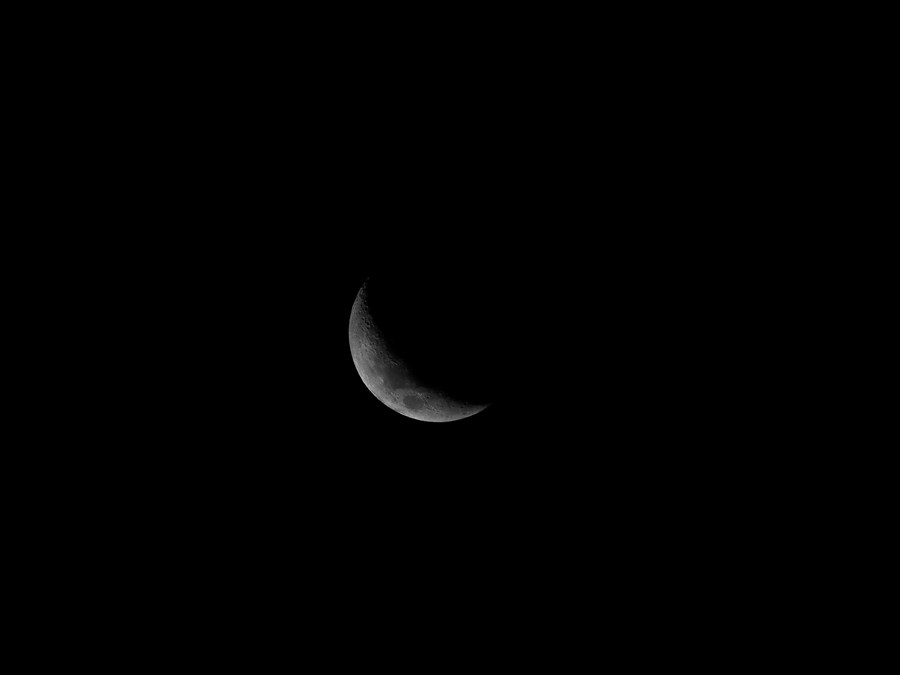
Note: When shooting bright source objects such as the Moon, especially at full zoom, always use Spot Metering. Nothing else will give you a clean shot. In the case of the Moon meter on the brightest section visible. When shooting the Moon best results can be achieved by using Black and White Film Simulation.


HS10 Image
First Up we have the HS10 images. These are followed by the HS20 images shot with Auto WB and in Black and White Mode. 
Settings for the HS10 images were also B & W Film Simulation with spot metering . ISO 100,and a shutter speed of 1/250 for the full moon and ISO 100 with a shutter speed of 1/320 for the crescent moon.


The next in the series are images of the moon were taken this month. The partial Moon while a lot brighter than the crescent moon, still maintains a good amount of detail, as does the full moon after a bit of post processing. Processing of the Moon images when shot in B&W is limited to reduction of the glare by reducing the amount of Gamma, improving contrast in the grey tones and small amount of sharpen and a final increase in overall contrast.
The first image of the partial Moon was shot using Auto WB, manual settings ( not manual focus), B&W mode, 126mm, ISO 100, @ 1/160, F5.6


For the 2nd HS20 image, using Auto White Balance I switched to EXR SN mode at ISO 100. Film simulation was Astia converted to B&W. 1/280 sec @ F6.4 with EV-0.67. 126mm.
HS20 Image
Un-processed


The 3rd image shows the Moon shot in Standard color mode, EXR SN, using the "Shade" white balance setting. This has the effect of warming the image, and the color is what you would expect after the Moon had risen only a small amount above the horizon. The First image is the shot straight from the camera and the second image is after processing. You can see that while focus is good and the shot is correctly exposed there is a lot of glare in the image. This is where gamma correction plays a very big part in the processing of the image, resulting in much better detail and contrast.
HS20 Image
Processed, WB "Cloudy"


The next three images are all shot using a white balance setting of Incandescent (Tungsten), which is the setting I normally use when indoor shooting. EXR SN auto ISO 800 mode was used as well.
In all these images I left the EV setting at zero as I wanted the image to be shot using neutral settings.
The first image is taken at ISO 125 @ 1/250 sec f 5.6.
The next image is taken at ISO 160 @ 1/250 sec f 5.6.

HS20 Image
ISO 125, SN mode
So what gives? Why the change in ISO, all the other settings are the same. The difference is the metering. I'm still using spot here but in the first image I metered on the bright regions and in the second image I metered on the darker regions. This is why you need to be careful shooting like this as the camera will change the ISO which can translate into a noisy and non usable image.
The third image is the processed version of the ISO125 image. You will note how much more of the grey and darker areas come through when using "Shade" white balance.
HS20 Image
ISO 160, SN mode

My preference for Moon photography is to shoot in Black & White as the contrast between light and shade is better presented, especially as the Moon near its full phase.
HS20 Image
ISO 125, SN mode, processed.
The final image is one taken from the "Lunar World Record 2009" If you are interested in Lunar Photography or astro-photography, then this site makes for an interesting read.


Saturday, May 5, 2012

Fuji HS30 .... The affordable super-zoom.

As the title suggest, for the first time since the HS series from Fuji came into production a new model can actually be found at an affordable price. So we shall explore the options and see if the HS30 or HS25 is for you.
FujiFilm HS30EXR


At the time of writing this the HS30 is still proving hard to find here. There are various outlets that have it but strangely  the more mainstream suppliers such as Dick Smith and Harvey Norman to name but a couple don't appear to be holding stock.
Those more mainstream online suppliers such as Photo & Video International have them stocked but at a premium price even though they say its a "Special Introductory" price.


FujiFilm HS25EXR
Smaller Fuji boutique stores such as Hamilton's Lindale Photocentre also stock them and at $849.99NZD is a little on the expensive side but at least you get good support from them.


However for those more budget minded or cash strapped can of course jump online and order one through these folk.
Expert Infotech.
You can save yourself a Bundle too by doing this.
Their current HS30 price is $579NZD and that includes GST.
Their current HS25 price is $475NZD and that represents extremely good buying. Especially as their current price for the HS20 is $488NZD and is a "special " price to boot.


FujiFilm HS20EXR
Lets now assume you are an HS10 or a F300 user for example looking to step up to a better class of camera. What to do. At $488.00 the HS20 represents pretty good value, but at a little less you have the HS25 and this is a new generation camera.


My answer is go for the HS25 as a minimum. Why?
Simple really, you get a lot of the new advances as seen in the HS30, intelligent zoom,new sensor,etc. You get the same body as the HS10/20 and the same EVF. You also get the same LCD as the HS20 and that's much better than the HS10's. This isn't a problem if you are like me, needing to wear glasses and as I wear graduated bifocals the EVF really isn't all that relevant.You don't get RAW image format and for most of us that's not a huge loss, but a few may grumble. You also don't get the improved manual zoom, but unless you are using a tripod for that type of photography that's really a non issue as well. Both also sport the improved AF & write speed times although to date I haven't heard much from users as to just how much it has improved.


You do still retain the AA batteries, and that to me is a very good thing. To date I have seen reports that the claimed 600 shots on a fully charged battery in the HS30 is accurate, however I'm a fan of rechargeable Lithium AA batteries. A set of these will give me well over a 1000 shots and I usually review most images and have my camera set to auto switch off at 5 minutes. AA batteries are like coke vending machines. Every corner store anywhere on the planet stocks coke and AA batteries. For the traveler that's a very good thing and one I'm finding I'm reluctant to give up.


For those who want an improved manual zoom, with improved body to accommodate it, much improved EVF, standard lithium battery,RAW images capability then the camera for you will be the HS30 and at $579.00 its a bargain too.
In fact there isn't too much separating all three cameras with the HS25 really being a partly updated HS20 and the HS30 having the more complete suite of tools and improvements. I had really wanted to get an XS1 but having now seen a good many images from the XS1 its a camera I will avoid this time round. Hopefully its shortcomings will be addressed in the next iteration. For now it looks like the HS30 has the goods to give the XS1 more than a run for its money and at current pricing you could buy two HS30's for around the same money.


Up until recently I had decided not to get a new camera this year and wait and see how things went with the X series camera recalls and in fairness to Fuji they have now stepped up to the plate and offer a solution for the X series owners. I have been pushing the HS20 pretty close to its limits lately and was hoping to step up to a better unit. That now looks increasingly like the HS30 is the unit I will go for even though I don't like losing the AA batteries.
There looks to be enough improvement in the sensor to warrant another HS series camera, but as its almost winter now I will most likely procure the unit towards late winter early spring. Doing so will allow sufficient time to see how the improvements go in the XS1 before I make a new purchase. For those of you who cant wait just click on the caption under the images and it will take you to the website for Expert Infotech.